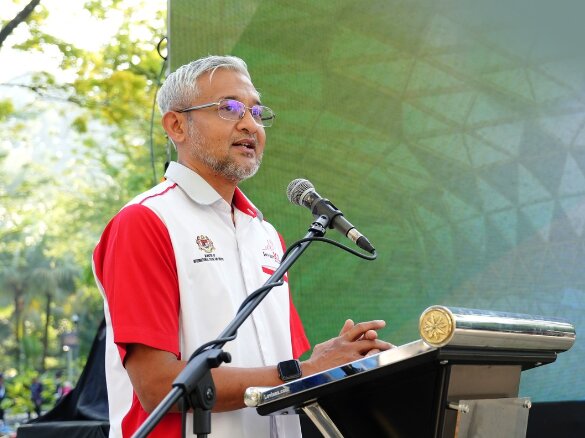
KUALA LUMPUR, 13 JANUARY 2026: Tengku Datuk Seri Zafrul Abdul Aziz has called for sharper execution to turn investments into productivity gains.
Speaking at his first media engagement as chairman of Malaysian Investment Development Authority (MIDA), Tengku Zafrul said the real measure of investment success lies not in approvals but in outcomes that raise productivity and deliver tangible benefits to the economy.
He added that the global economic landscape remains uncertain, but opportunities continue to exist for countries that are able to respond with agility.
"Many of you may know me from my corporate days and later from my years in public service, but one lesson stands out: policy matters, execution matters more," he said.
"We have good plans, we have good strategy, but do we have good execution? Now we need to up our game even more. It is good to have good plans, but the plan has to be agile.
He said the current economic environment is increasingly complex and unpredictable, making adaptability a critical requirement for policymakers and investment agencies.
"If you see the landscape of what we face today, especially the economic landscape, it is sketchy. So we need to be agile."
Tengku Zafrul said Malaysia's investment narrative must move beyond headline figures and focus more squarely on outcomes, particularly in terms of productivity gains, quality job creation and meaningful economic spillovers.
When it comes to execution, he said it is no longer just about approved investment but realised investment.
"But to me, it is not just about realised investment. There is no point in us executing something, and the outcome is not the intended outcome.
"Similarly, for (every) realised investment, are we creating the right spillover? What kind of jobs are we creating? Are we creating jobs where income levels are moving?
"Are we creating jobs where people are no longer underemployed? There is no point in creating jobs which don't increase the productivity of the country."
As MIDA chairman, Tengku Zafrul said the agency's priority would be to strengthen execution, enhance coordination and ensure that investments deliver measurable outcomes that support long-term national growth.
He said Malaysia's investment narrative must move beyond headline figures and focus more squarely on outcomes, particularly in terms of productivity gains, quality job creation and meaningful economic spillovers.
"We look at numbers in aggregate terms – GDP, unemployment, interest rate, and inflation numbers," he said, adding that as policymakers, there is a need to go further and understand what that growth actually means.
"We must look at the growth of the country and examine how it spills over to industries, small and medium enterprises (SMEs), and ultimately to the people."
He highlighted the critical role of SMEs in Malaysia's economy, noting that the sector employs a significantly larger share of the workforce compared with many other industries.
Ensuring that investment-led growth reaches SMEs, he said, would be essential for inclusive and sustainable economic expansion.
On the labour market, Tengku Zafrul pointed to Malaysia's historically low unemployment rate of about 2.9 per cent, describing it as an unprecedented level during his time in public office.
"I don't think I have seen those numbers," he said, adding that such conditions reinforce the importance of productivity growth rather than relying solely on labour expansion alone.
On investment trends, Tengku Zafrul said approved investments remain important, but sectoral performance varies.
Certain industries, including semiconductors, continue to perform strongly and remain competitive even without direct government support.
Going forward, he said the focus should not be just on the big numbers but on ensuring that investments, especially in high-performing sectors, are effectively executed and integrated into the broader economy.